Regenerative aesthetics has become one of the most exciting areas of modern aesthetic medicine. WINK Aesthetics + Wellness is on the cutting edge of regenerative treatments to help patients achieve optimal, natural-looking aesthetic results. Rather than simply adding volume or temporarily relaxing muscles, treatments like PRF and PRP work by harnessing your body’s own healing and regenerative abilities to improve skin quality, stimulate collagen production, and support healthier tissue.
If you’ve been researching natural rejuvenation treatments, you’ve likely come across both PRF and PRP. While they are closely related, they are not the same treatment. PRF, which stands for Platelet-Rich Fibrin, is often considered the next generation of regenerative blood-based treatments vs PRP, which stands for Platelet-Rich Plasma.
At WINK Aesthetics + Wellness in Monmouth County, NJ, we frequently meet patients who are unsure which option may be right for their concerns. Understanding the differences can help you make a more informed decision and determine whether regenerative treatments may fit into your overall aesthetic plan.
What Are PRP and PRF?
Both Platelet-Rich Plasma (PRP) and Platelet-Rich Fibrin (PRF) are derived from your own blood. The treatment process begins with a simple blood draw, which is then processed in a centrifuge to separate and concentrate the components responsible for healing and tissue repair.
These concentrated platelets contain growth factors that help stimulate collagen production, support cellular repair, and improve tissue regeneration. Because the treatment uses your own blood, the risk of allergic reactions or rejection is extremely low.
While both treatments rely on similar principles, the way they are prepared and how they behave within the tissues differs significantly.
What Is PRP?
For PRP, after a blood sample is collected, it is spun at a high speed to separate the plasma and concentrate platelets. The resulting liquid contains growth factors that can be injected into targeted areas or combined with treatments such as Microneedling.
PRP has been used in medicine for many years for:
- Skin rejuvenation
- Hair restoration
- Improving skin texture
- Supporting collagen production
- Enhancing healing after procedures
What Is PRF?
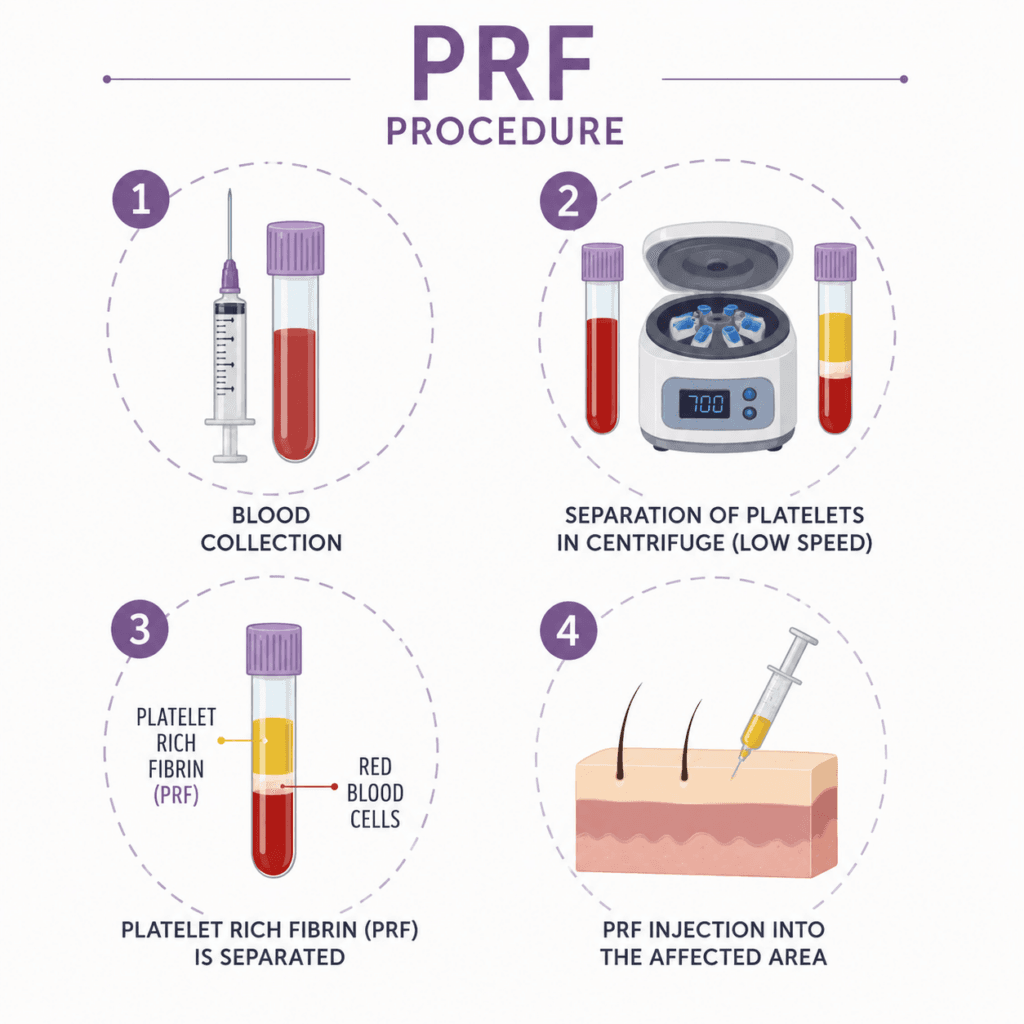
PRF represents an advancement in technology vs PRP. PRF is processed differently than PRP, using a slower centrifugation protocol that preserves additional regenerative components, including white blood cells, stem cells, and a fibrin matrix.
This fibrin matrix acts as a natural scaffold within the tissues. Instead of releasing growth factors all at once, PRF releases them gradually over time.
PRF vs PRP: What Are the Main Differences?
Although both PRF and PRP are created using your own blood, there are some important differences in how they work and the results they can achieve.
One of the biggest differences is how growth factors are released. PRP delivers a concentrated burst of growth factors relatively quickly after treatment. PRF, on the other hand, contains a fibrin matrix that allows those growth factors to be released more gradually over time. This sustained release can support longer-term collagen production and tissue regeneration.
PRF also behaves slightly differently within the tissues. While PRP functions primarily as a regenerative liquid, PRF creates a natural fibrin scaffold that can provide gentle structural support while stimulating healing and collagen production. This is one reason why PRF has become increasingly popular for natural regenerative aesthetic procedures and is used at WINK Aesthetics + Wellness.
Is PRF Better Than PRP?
This is one of the most common questions we hear in clinic. For facial rejuvenation and under-eye concerns, many practitioners, including our experts at WINK Aesthetics + Wellness now consider PRF the more advanced regenerative option.
PRF at WINK Aesthetics + Wellness
At WINK Aesthetics + Wellness, PRF is available as a featured part of our Regenerative Treatments menu for patients seeking a completely natural approach to facial rejuvenation:
- PRF Liquid Injections – to stimulate collagen production and provide a smoother, revitalized appearance, particularly under the eyes.
- PRF Bio-filler – adding volume naturally to areas of the face traditionally treated with other synthetic-type fillers.
- Microneedling with PRF – to provide the benefits of microneedling for improving texture and tone of the skin with the added benefit of PRF to optimize results, speed healing, and improve long-term effects.
- Bio-PRF Lift – to provide a natural, overall lifted look for the skin using a combination of Microneedling with PRF, PRF Liquid Injections, and PRF Bio-filler
- Hair Restoration with PRF – to promote hair growth and stimulate follicle activity with the support of a fibrin matrix and growth factors to enhance response rates.
Who Is a Good Candidate for PRF?
PRF is often chosen by patients who want a natural approach to rejuvenation. It can be ideal for those concerned about collagen loss, early signs of aging, skin quality, or hair thinning.
Results develop gradually as your body’s natural healing processes are activated. The goal is not to change the way you look, but to support healthier skin, stronger hair, and a more refreshed appearance over time.
Frequently Asked Questions
Does PRF last longer than PRP?
In many cases, yes. The fibrin matrix in PRF allows for a slower release of growth factors, which may contribute to longer-lasting regenerative effects.
Is PRF safer than PRP?
Both treatments are considered very safe because they use your own blood products.
Does PRF replace dermal fillers?
Not necessarily. Some patients benefit from one approach, while others may benefit from a combination.
How many PRF treatments are needed?
The number of sessions varies depending on the concern being treated. Many patients achieve optimal results through a series of treatments followed by maintenance sessions.
Is there downtime after PRF?
Most patients experience mild swelling, redness, or bruising that resolves within a few days.
Are PRF and PRP natural treatments?
Yes. Both treatments are derived from your own blood and rely on your body’s natural healing mechanisms.
Exploring Regenerative Treatments at WINK Aesthetics + Wellness
At WINK Aesthetics + Wellness, our physician-led team takes a personalized approach to regenerative medicine. Whether you are interested in PRF Injections or other advanced aesthetic treatments, we can help create a plan tailored to your needs.
If you are considering regenerative treatments and would like expert guidance, book a consultation with WINK Aesthetics + Wellness. Conveniently located in Monmouth County, NJ, we proudly serve patients from Eatontown, Red Bank, Middletown, Ocean Township, Long Branch, Colts Neck, Ocean County, and surrounding communities.